
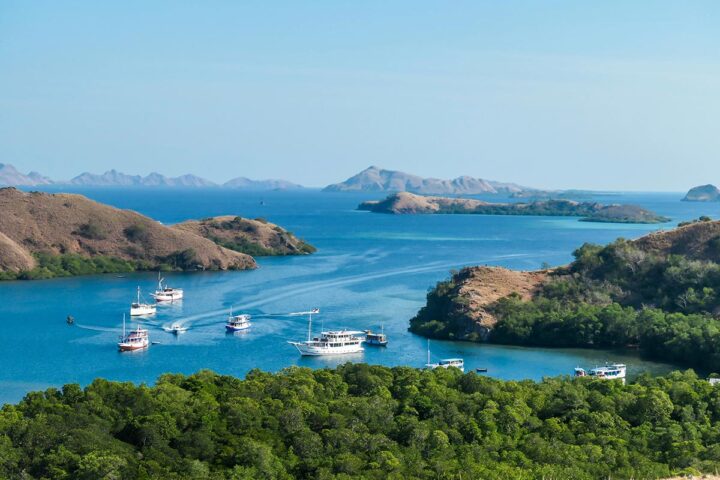
Indonesia’s marine tourism industry is showing strong growth potential as international visitor numbers rise, yacht activity increases and the government looks to expand infrastructure across some of the country’s best-known coastal destinations.
Tourism Minister Widiyanti Putri Wardhana said Indonesia recorded 127 superyacht arrivals during 2025–2026, the second-highest figure in the Asia-Pacific region after Australia. The government is now positioning marine tourism, particularly yacht tourism, as a key area for future growth.
Yacht Tourism Offers New Growth Potential
The domestic yacht tourism market is projected to grow from around US$261.9 million in 2025 to US$449.1 million by 2033, equivalent to an annual growth rate of about 7 percent.
Widiyanti said Indonesia’s geography and marine biodiversity provide a strong foundation for developing higher-value tourism products linked to the sea.
127 superyacht arrivals were recorded in Indonesia during 2025–2026, according to the Tourism Minister.
International Tourism Continues to Support the Market
Indonesia welcomed 15.39 million international visitors in 2025, according to Statistics Indonesia.
Bali’s Ngurah Rai Airport accounted for more than 6.9 million of those arrivals, underlining the continuing importance of Bali as a gateway for international tourism.
Bali’s position as an international tourism gateway also places the island within a wider network of marine destinations extending across Indonesia.
Marine Tourism Extends Far Beyond Bali
Indonesia’s marine tourism potential extends well beyond Bali. In western Indonesia, destinations include the Riau Islands, Belitung, Ujung Kulon and the Thousand Islands.
Further east, Bali, Lombok and the Gili islands form part of a major tourism corridor, while Labuan Bajo has become an increasingly important marine tourism gateway.
Other destinations such as Wakatobi, Banda, Morotai and Raja Ampat attract visitors for diving, snorkelling and other ocean-based activities.
Indonesia Faces a Marine Infrastructure Gap
Despite the growth potential, Indonesia still faces a significant infrastructure gap.
The country currently has 29 designated yacht entry and exit ports, with 19 providing customs or duty-free entry arrangements. However, Indonesia has only 10 marinas with a combined 336 berths.
Indonesia: 10 marinas and 336 combined berths.
Singapore: More than 1,200 berths.
Malaysia: More than 1,400 berths.
Thailand: More than 1,400 berths.
The figures cited by the Tourism Ministry show that Indonesia’s marina capacity remains relatively small compared with several neighbouring destinations.
Infrastructure Could Become an Investment Opportunity
The government sees the infrastructure gap as both a challenge and an investment opportunity.
New marinas, additional berthing capacity and improved services for yachts are expected to play an important role if Indonesia is to capture a larger share of the regional marine tourism market.
The government is also seeking international cooperation to develop marinas to global standards in strategic destinations, particularly in areas where tourism demand is growing but marine infrastructure remains limited.
Building a Wider Marine Tourism Ecosystem
Widiyanti said the aim is not simply to build more marinas, but to create a broader tourism ecosystem involving local businesses, tour operators, transport providers, hospitality companies and communities.
This approach would connect marine tourism with other parts of the local economy rather than treating marinas as standalone facilities.
Marine tourism can support more than yacht arrivals. A broader ecosystem can involve hospitality, transportation, tours, restaurants, local businesses and surrounding communities.
Bali, Lombok and Labuan Bajo Could Benefit
For destinations such as Bali, Lombok and Labuan Bajo, stronger marine connectivity could open opportunities for longer yacht itineraries and higher-spending visitors.
Improved marine connectivity could also create new demand for local tourism services as visitors spend more time moving between coastal destinations rather than visiting only one location.
What Marine Tourism Growth Could Mean for Bali
Bali is already one of Indonesia’s most important international tourism gateways. Further development of marine tourism could strengthen the island’s role as a starting point or connecting destination for wider trips through Indonesia’s coastal regions.
Bali’s connections with Lombok, the Gili islands and other destinations also make it relevant to the development of longer multi-destination marine itineraries.
At the same time, the development of marine tourism will require appropriate infrastructure and services if increasing visitor numbers are to be accommodated effectively.
Best Bali Real Estate Perspective
The expansion of Indonesia’s marine tourism industry could be relevant to Bali’s property market because tourism infrastructure and visitor activity can influence the attractiveness of coastal and gateway locations.
Areas with strong connections to marinas, ports, beaches, hospitality businesses and transportation networks may become increasingly interesting as marine tourism develops. However, the article does not establish that specific property values will rise as a result.
For property buyers, the broader lesson is that location and infrastructure remain important. A property positioned near established tourism services and transportation links may offer practical advantages as Bali’s tourism economy continues to evolve.
For property buyers: When comparing Bali locations, consider not only the property itself but also its access to tourism infrastructure, transportation, coastal destinations and established local services.
Indonesia’s Marine Tourism Opportunity
Indonesia has a substantial natural advantage in marine tourism, with an extensive coastline, diverse marine environments and internationally recognised destinations.
The challenge will be turning that potential into a connected tourism network supported by sufficient marinas, berths, transportation, services and sustainable management.
If infrastructure development keeps pace with demand, marine tourism could become an increasingly important part of Indonesia’s wider tourism economy.
Indonesia’s marine tourism industry is entering a period of significant opportunity. Rising international tourism, growing yacht activity and the country’s extraordinary marine destinations provide a strong foundation, while the shortage of marina capacity highlights the infrastructure work still required. For Bali, Lombok and Labuan Bajo, stronger marine connectivity could create new opportunities across tourism and related local businesses.