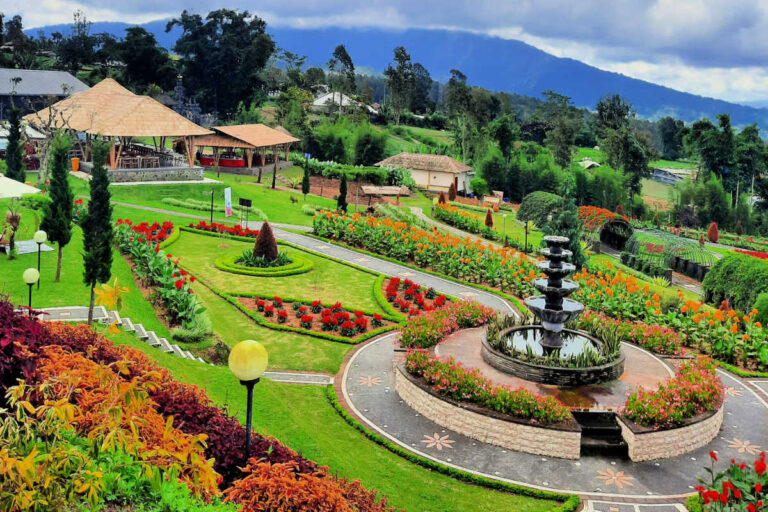
Bali may be famous around the world for its beaches, rice terraces and volcanic landscapes, but the island also has an impressive collection of tropical gardens.
Gardening is deeply connected to Balinese life, from carefully tended home gardens and family compounds to flowers grown for ceremonies and the preservation of mature trees and native plants.
Botanical gardens and historic water gardens offer visitors another way to experience Bali, particularly for travelers looking to explore beyond the island’s beaches and busiest tourist areas.
Bali Botanic Garden In Bedugul
One of Bali’s most significant garden destinations is Kebun Raya Eka Karya, better known as the Bali Botanic Garden, located in the mountainous Bedugul region.
Situated at approximately 1,300 meters above sea level, the government-run facility covers around 157.5 hectares and is described by the source as the largest botanical garden in Indonesia.
The highland environment is considerably cooler than Bali’s coastal resorts, with temperatures generally ranging between 18 and 24 degrees Celsius. For visitors accustomed to Bali’s tropical heat, the cooler mountain climate can make the gardens a refreshing change.
A Garden Built Around Conservation
The Bali Botanic Garden is more than a conventional landscaped park. It serves as a research and conservation facility, with a particular focus on flora from the dry highland regions of eastern Indonesia.
According to the source article, the garden contains more than 21,000 living specimens representing more than 1,100 plant species.
Because of its enormous size, exploring the entire garden on foot can be physically demanding. Visitors can use e-bikes, bicycles or golf carts to make getting around the grounds easier.
Orchids, Begonias And The Bamboo Forest
Several specialized areas make the Bali Botanic Garden particularly interesting for visitors.
The Orchid Garden contains more than 320 varieties collected from across the Indonesian archipelago, including Java, Sulawesi and East Nusa Tenggara.
Greenhouses containing cacti and succulents provide a striking contrast to the surrounding mountain environment, while the Begonia House features an extensive collection of begonias.
Another highlight is the Bamboo Forest, where visitors can walk beneath a dense natural canopy. Traditional Hindu shrines and Ramayana Boulevard, lined with stone statues depicting scenes from ancient epics, add a cultural dimension to the botanical experience.
The surrounding environment also provides opportunities for bird watching, with the source noting that numerous native bird species can be found in the wider area.
The Royal Gardens Of Tirta Gangga
In eastern Bali, the garden experience changes dramatically. Near Mount Agung in Karangasem Regency, Tirta Gangga offers a formal royal water garden rather than the expansive forested environment found at Bedugul.
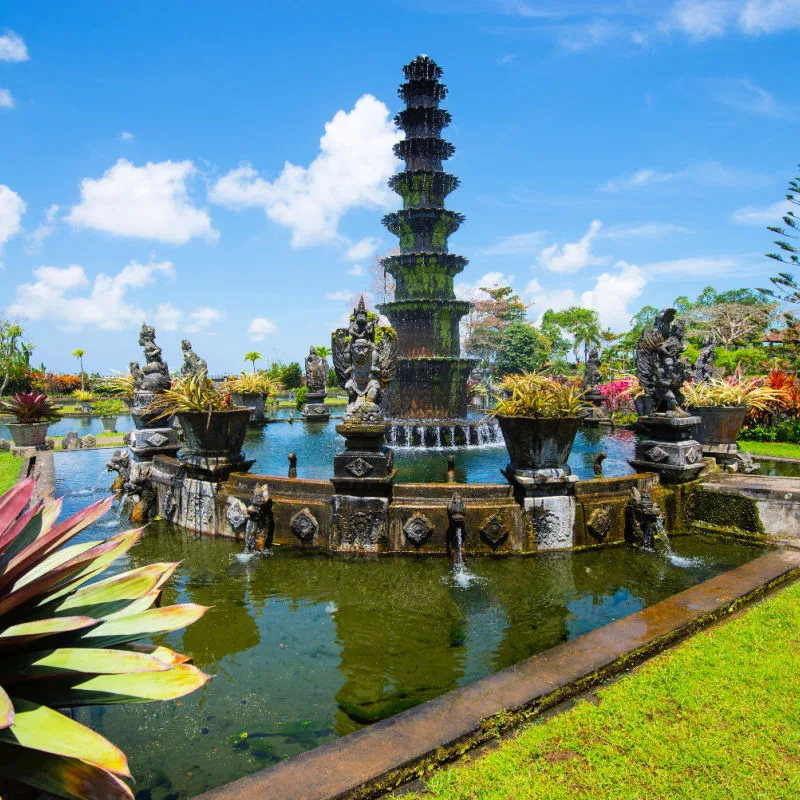
Built in 1946 by the former King of Karangasem, Tirta Gangga takes its name from the sacred Ganges River and is centered around the spring water that feeds the complex.
Its design combines traditional Balinese architectural details with Chinese and European influences.
Water, Fountains And Koi Fish
Water is the defining feature of Tirta Gangga.
The garden includes a large eleven-tiered fountain surrounded by clear pools filled with thousands of colorful koi fish.
One of the most memorable visitor experiences is walking across the stone stepping paths positioned directly over the main pool while watching the koi swimming beneath the stones.
Fish food is available from vendors outside the entrance, providing an additional activity for visitors, particularly families.
Visitors can also access a public bathing pool at the rear of the complex for an additional fee.
What To See Around Bedugul
A trip to the Bali Botanic Garden can easily be combined with several other attractions in the Bedugul area.
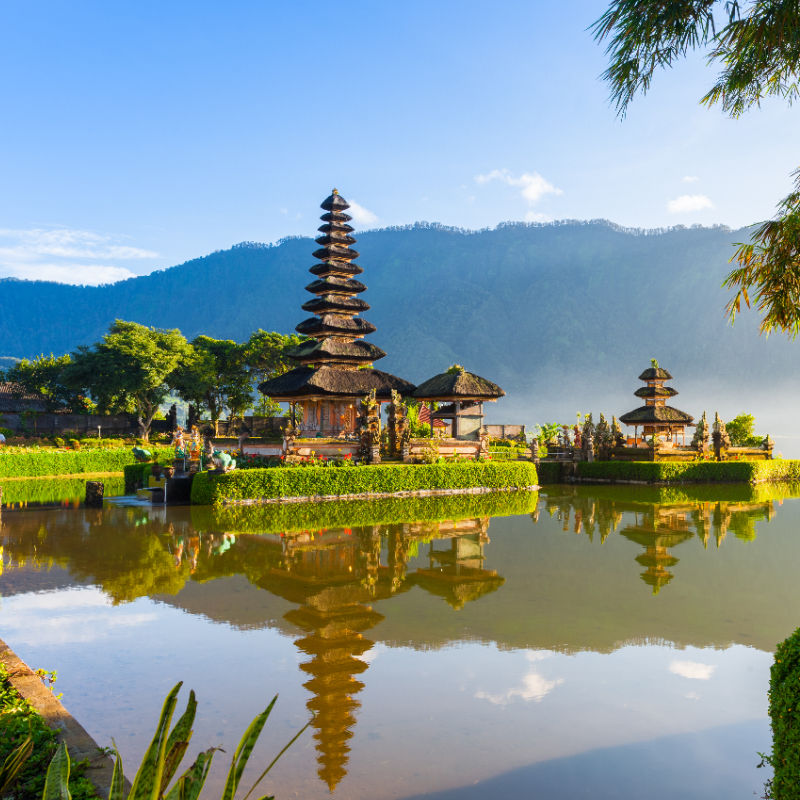
Nearby Pura Ulun Danu Beratan is one of Bali’s best-known lakeside temples, located beside Lake Beratan. The temple complex includes landscaped lawns and flower beds overlooking the lake.
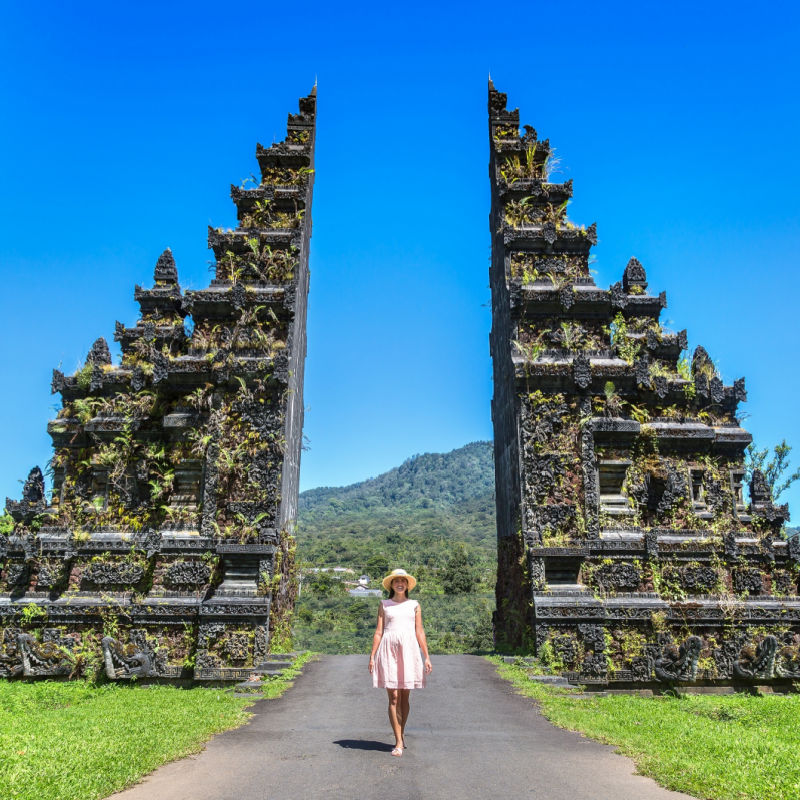
Visitors can also stop at Candi Kuning Market for local produce, spices, crafts and strawberries, or visit the famous Handara Gate surrounded by the green mountain landscape.
Exploring East Bali From Tirta Gangga
Tirta Gangga can also be combined with other attractions in eastern Bali.
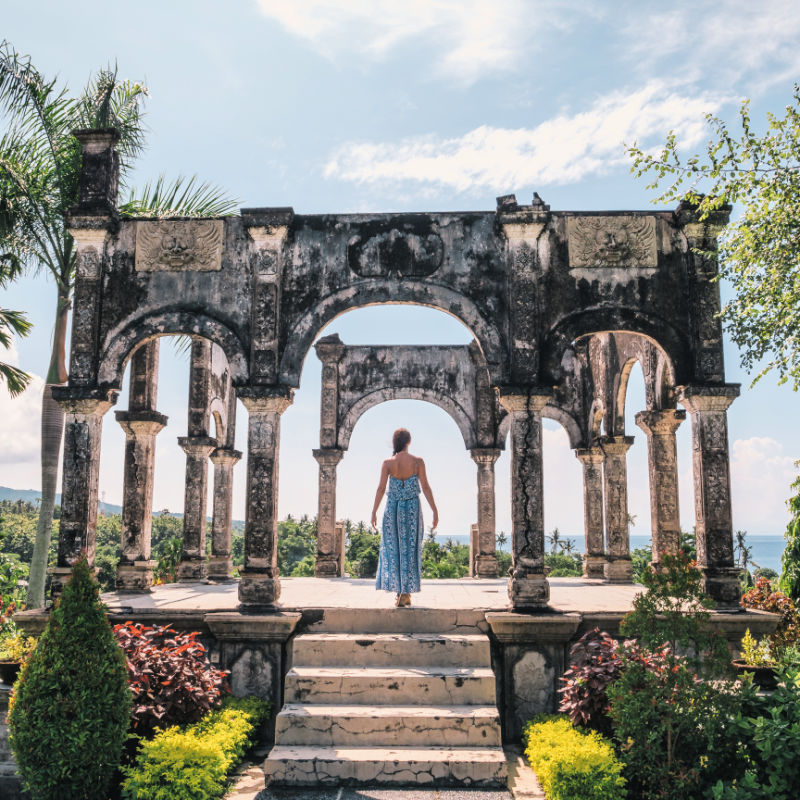
Nearby Taman Sukasada Ujung, commonly known as Ujung Water Palace, provides another historic garden experience with bridges, pillars, pavilions, landscaped lawns and views toward the coast.
Organized tours may also combine Tirta Gangga with Lempuyang Temple or other attractions in Karangasem.
For travelers who prefer a slower pace, the nearby area of Sidemen offers another way to experience the eastern interior, while Candidasa provides access to the coast.
Staying Overnight In Bali’s Garden Regions
Because Bedugul and eastern Bali contain numerous attractions, spending several nights in these areas can provide a more relaxed experience than attempting to visit everything as a day trip from southern Bali.
Accommodation around Bedugul reflects the mountain environment, with nature retreats, golf properties and lakeside accommodations forming an important part of the area’s tourism offering.
The source highlights Handara Golf & Resort Bali as one option for visitors looking to stay near the northern attractions.
For a more intimate mountain experience, Strawberry Hill Hotel & Restaurant offers cottage-style accommodation overlooking rainforest and agricultural terraces.
In eastern Bali, visitors can base themselves around Sidemen or Candidasa while exploring Tirta Gangga, Ujung Water Palace and other attractions in Karangasem.
Practical Information For Visitors
Bali Botanic Garden
The source states that the garden operates from 8:00 AM to 4:00 PM on weekdays and until 5:00 PM on Saturdays, Sundays and public holidays.
Entry is described as costing less than approximately US$2 per person, with additional charges possible for parking.
Because Bedugul weather can change quickly, visitors are advised to carry an umbrella or lightweight raincoat.
Tirta Gangga
The source states that Tirta Gangga is open daily from 6:00 AM to 7:00 PM.
International adult admission is approximately IDR 90,000, or around US$6 according to the source.
Carrying small-denomination Indonesian Rupiah can be useful for fish food, lockers, parking and other small expenses.
Why Bali’s Gardens Are Becoming More Appealing
Bali’s gardens offer something different from the island’s better-known beach and nightlife attractions.
They provide opportunities to experience cooler mountain environments, historic architecture, tropical plants, water features and quieter landscapes.
They can also appeal to a broad range of travelers. Families can enjoy the wildlife and gardens, photography enthusiasts have numerous landscapes to explore, and travelers simply looking for a more peaceful day away from the southern tourist areas can find plenty to appreciate.
Best Bali Real Estate Perspective
The popularity of Bali’s gardens also highlights an important aspect of the island’s appeal: Bali’s tourism experience extends far beyond its beaches.
Areas such as Bedugul, Karangasem and Sidemen offer a very different environment from the heavily developed southern tourist belt. Cooler mountain landscapes, agricultural areas, historic gardens and cultural attractions contribute to the diversity of these regions.
From a real estate perspective, this diversity is important because different parts of Bali appeal to different lifestyles. Some buyers prioritize beaches and restaurants, while others are more interested in nature, cooler temperatures, quiet surroundings and access to cultural attractions.
The growth of tourism interest in gardens and nature-based attractions also demonstrates why accessibility and surrounding amenities matter when evaluating property. A location does not necessarily need to be beside a beach to benefit from Bali’s tourism appeal.
Bedugul and eastern Bali illustrate how nature, culture and tourism can work together to create attractive destinations outside the island’s busiest southern areas.
A Different Side Of Bali
For visitors who have already experienced Bali’s beaches, restaurants and traditional tourist attractions, the island’s gardens provide another reason to explore further.
From the cool mountain environment of the Bali Botanic Garden to the historic water features of Tirta Gangga, these destinations demonstrate the extraordinary variety of landscapes found across the island.
Conclusion
Bali’s tropical gardens offer visitors a quieter and more nature-focused way to experience the island.
The Bali Botanic Garden provides a huge highland environment centered on conservation and plant diversity, while Tirta Gangga combines royal history, architecture, water and tropical landscaping in eastern Bali.
Both destinations can also be incorporated into wider itineraries that include temples, markets, mountain scenery, cultural sites and other attractions.
For travelers looking beyond Bali’s beaches, these gardens provide a compelling reminder that some of the island’s most memorable experiences can be found well away from the coast.