By Captain Lawrence | Best Bali Real Estate Insights
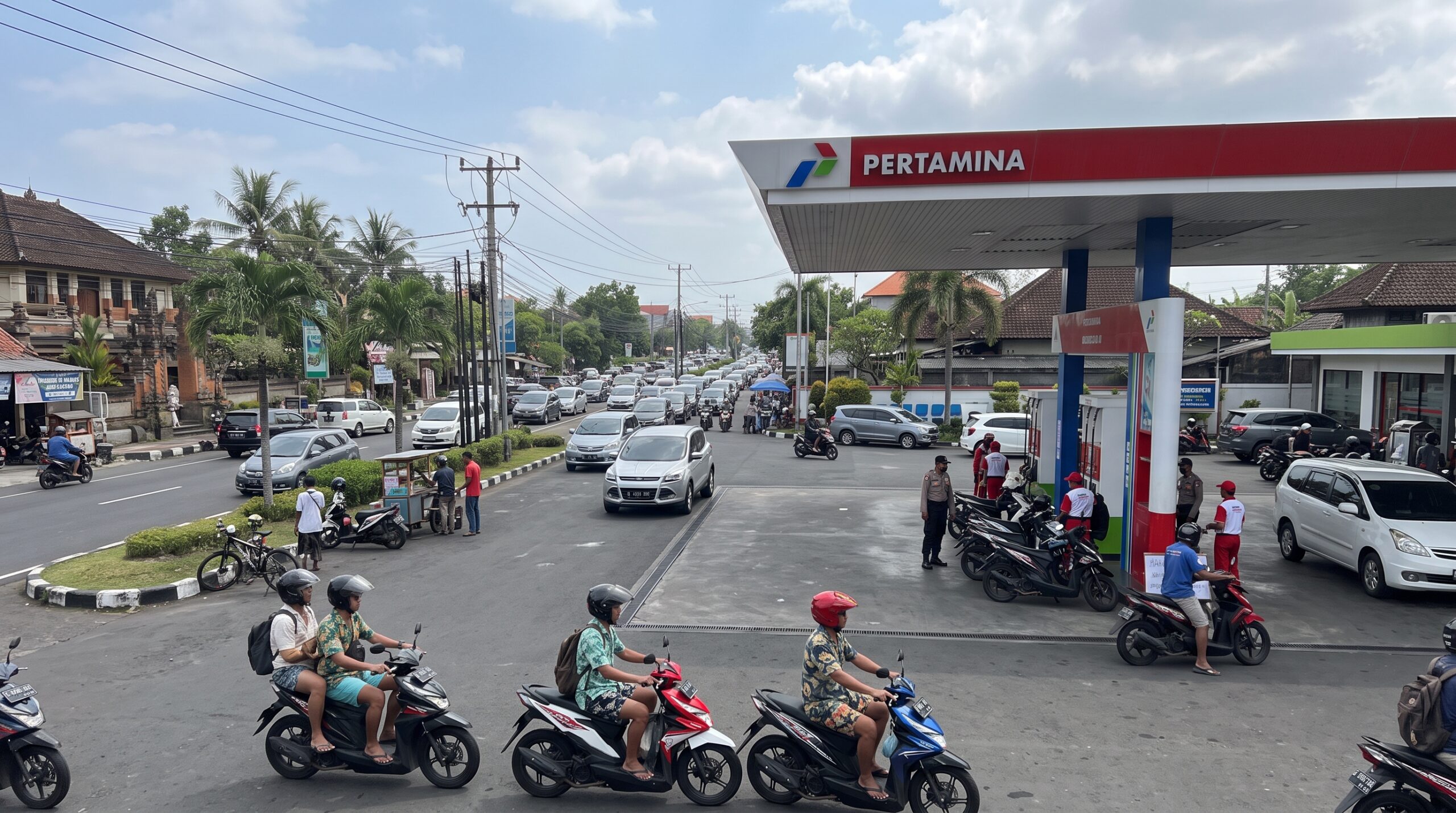
There has been an unmistakable pinch at petrol stations across Bali over the past few days. Both car drivers and scooter riders have weathered up to two-hour waits at fuel pumps, turning routine 45-minute commutes into grueling journeys and backing up entire lanes along key arteries like the Bypass.

Sensational posts and alarmist rumors have circulated widely across group chats and social feeds, making it seem as though the island were facing an outright energy collapse.
Rumor or Fact:
To separate rumor from reality, we examined verified releases from the Bali Provincial Government (Pemprov Bali), energy distributor PT Pertamina Patra Niaga, and marine tracking data.
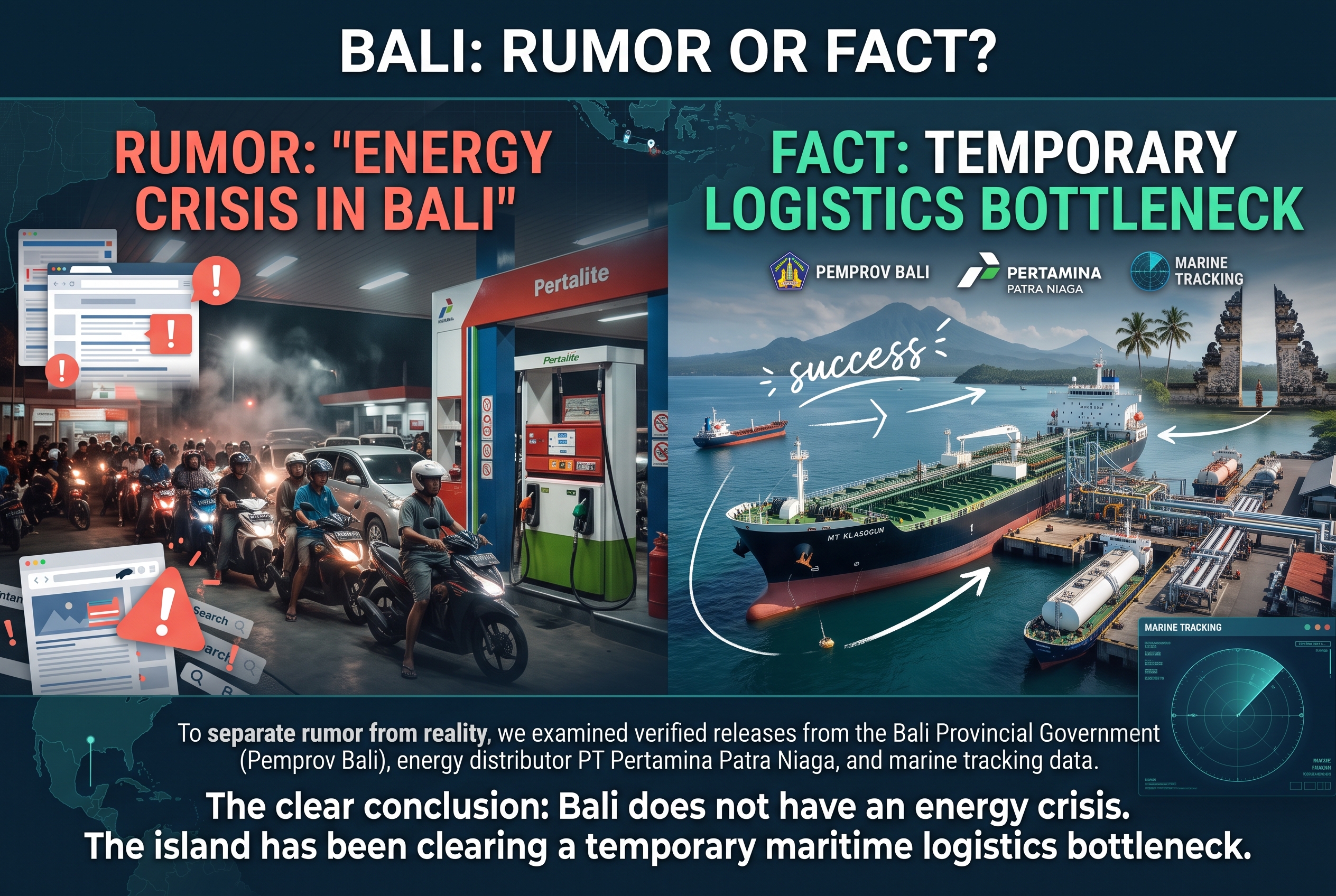
The clear conclusion: Bali does not have an energy crisis. The island has been clearing a temporary maritime logistics bottleneck.
The tankers have docked, fuel reserves have landed, and distribution is actively normalizing across the island.
The Anatomy of the Bottleneck: Why Pumps Ran Low:
Official briefings from Pemprov Bali and Pertamina confirm that local crude and refined oil supplies are intact nationwide. The disruption stemmed from a convergence of acute logistical challenges:
Adverse Maritime Conditions:
Severe ocean swells across regional straits delayed incoming fuel tankers from safely berthing at maritime terminals.
Mechanical Snags & Freight Backlogs:
An anchor mechanical issue on an unloading vessel coincided with heavy commercial freight delays across the Ketapang–Gilimanuk crossing.
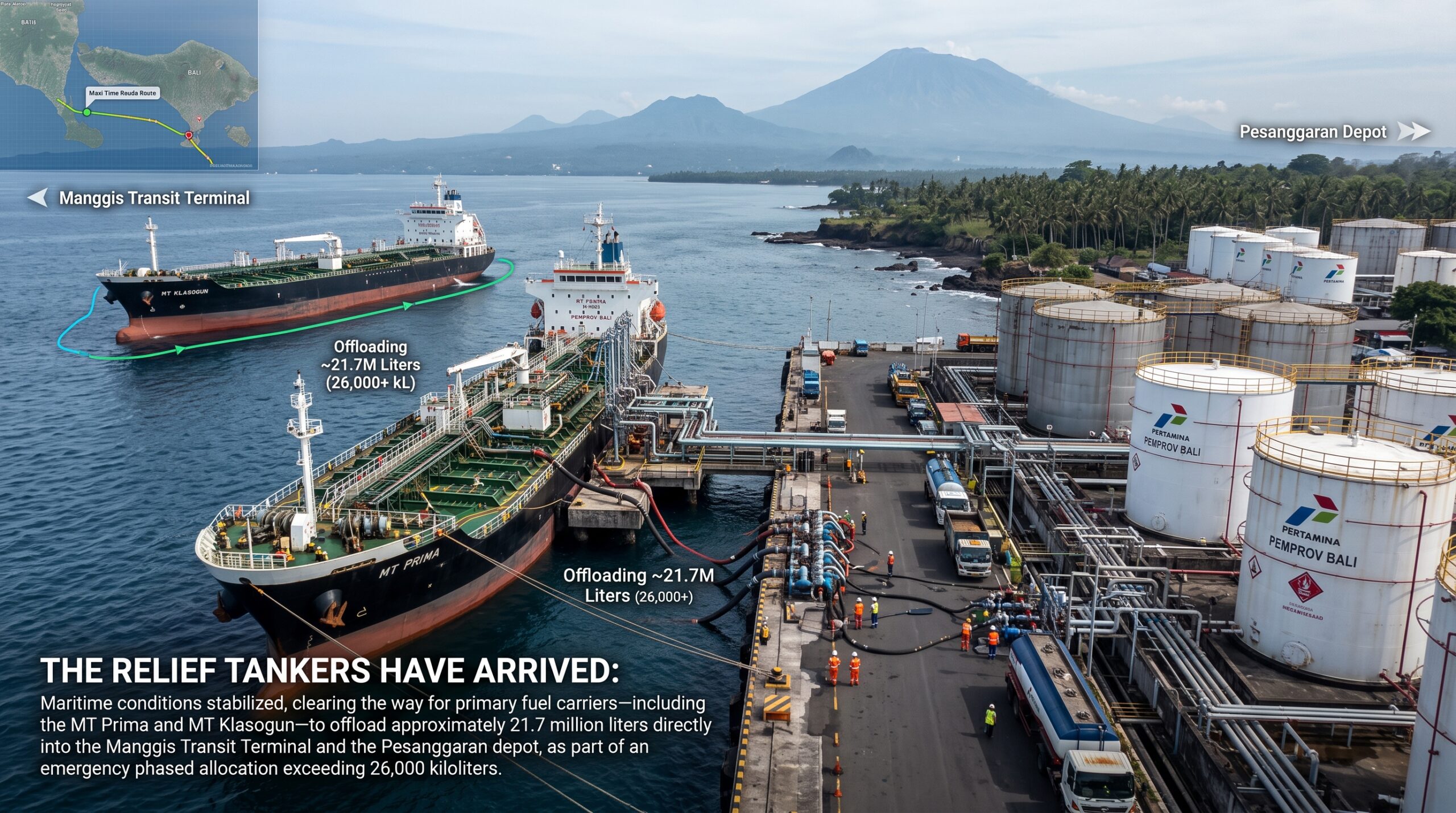
The Relief Tankers Have Arrived:
Maritime conditions stabilized, clearing the way for primary fuel carriers—including the MT Prima and MT Klasogun—to offload approximately 21.7 million liters directly into the Manggis Transit Terminal and the Pesanggaran depot, as part of an emergency phased allocation exceeding 26,000 kiloliters.
24/7 Distribution Mandate:
Depots are running continuous, round-the-clock transport dispatches. Pertamina instructed all 92 petrol stations across Denpasar and Badung to remain operational 24 hours a day to clear localized queues.
Normal Governance Protocols Maintained:
An emergency coordination meeting held at the Governor’s Jayasabha residence concluded without implementing work-from-home (WFH) mandates for public servants, confirming official confidence in supply stabilization.
Why are queues still visible?
While bulk marine terminals in Manggis and Pesanggaran are well stocked, replenishing underground retail storage across hundreds of neighborhood stations requires a 24-to-48-hour trucking cycle. Notably, long queues remain heavily concentrated at subsidized Pertalite (RON 90) pumps, whereas Pertamax (RON 92) lanes continue to move at a much faster pace.
Perspective: Infrastructure, Growth, and Resilience:
Having called Bali home for over 30 years after living in Canada and Hawaii—working as a sea captain and investing in local enterprise—one learns that unexpected supply hitches happen everywhere in the world.
Zoom out and consider the broader context:
Volatile geopolitical pressures across major trade corridors, persistent cost-of-living and housing crunches in North American metros, or recurring regional haze elsewhere in Southeast Asia.
Bali remains resilient and dynamic.
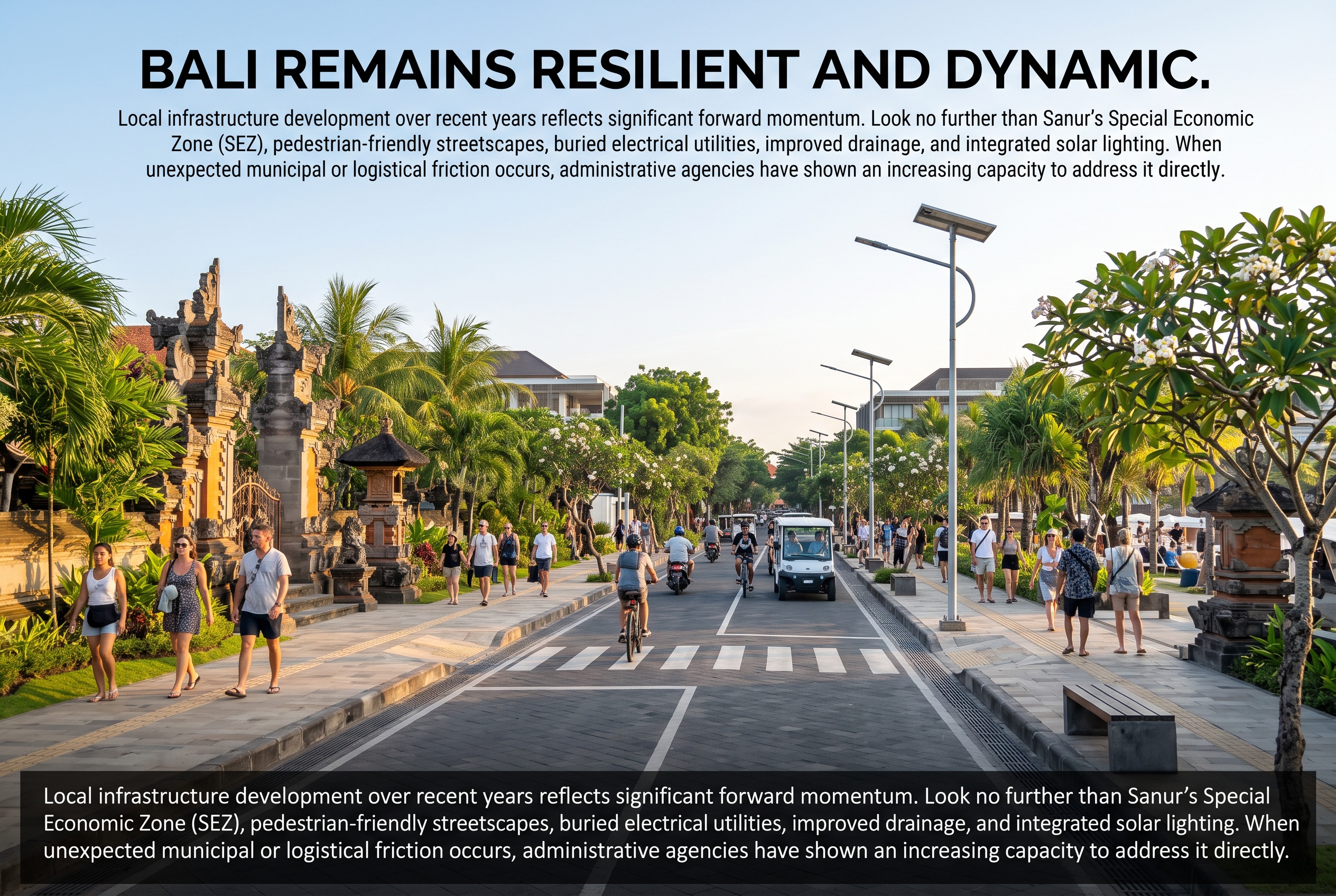
Local infrastructure development over recent years reflects significant forward momentum. Look no further than Sanur’s Special Economic Zone (SEZ), pedestrian-friendly streetscapes, buried electrical utilities, improved drainage, and integrated solar lighting. When unexpected municipal or logistical friction occurs, administrative agencies have shown an increasing capacity to address it directly.
Practical Guidance for the Next 48 Hours:
As distribution stabilizes across neighborhoods, a few sensible measures will keep your day running smoothly:
Avoid Panic Filling:
If your fuel gauge sits above half a tank, joining a 90-minute queue out of caution simply compounds road congestion.
Opt for Pertamax (RON 92):
If your vehicle needs fuel, skip the long queues reserved for subsidized Pertalite. Opting for non-subsidized Pertamax saves considerable time and minimizes queue congestion.
Consolidate Transit:
Use the quieter roads as an opportunity to work locally, walk to neighborhood amenities, carpool, or defer non-essential cross-island trips.
Watch for Roadside Price Gouging:
Unofficial roadside bottled fuel vendors (Pertamini) have been reported charging double or triple standard rates. Avoid supporting predatory pricing unless truly down to your last drops.
Buffer Airport and Business Travel:
Ride-hailing operators (Grab and Gojek) must navigate the same refueling logistics. Add an extra 30 to 45 minutes of cushion if you have airport transfers or time-sensitive appointments.
The Outlook:
The harbor bottlenecks have cleared, and supply lines are refilling the island’s distribution network. Given the ongoing 24-hour tanker dispatches from main terminals, retail service stations across South Bali are projected to return to standard operations as the week concludes.
Take a breath, plan transit thoughtfully, and enjoy the day. Bali’s fundamentals remain as sound as ever.